Your Cart is Empty


One of the things that most impresses first-time visitors to Morocco is the vibrancy of its bustling souks. These are spaces where the diverse array of Moroccan handicrafts vie for the visitor's attention. The richness of Moroccan craftsmanship is due in part to the country's fertile cultural tradition and also to the skill of its artisans. These artisans continue to employ ancestral techniques, allowing us to enjoy unique pieces full of character and authenticity. Today, we invite you to explore some of the most significant examples of Moroccan craftsmanship.

The word "marroquinería," which we use today to refer to objects and garments made of embossed leather, originates from the French term "maroquin," which directly evokes Morocco. This symbiosis between the country and one of its crafts reflects the high levels of excellence that Moroccan artisans have achieved in leatherwork. It is thanks to this excellence that Moroccan leather has gained international renown. Backpacks, handbags, wallets, belts, shoes… Moroccan leather goods are essential in any self-respecting souk, and of course, you'll also find them at Decoración Alcazaba.
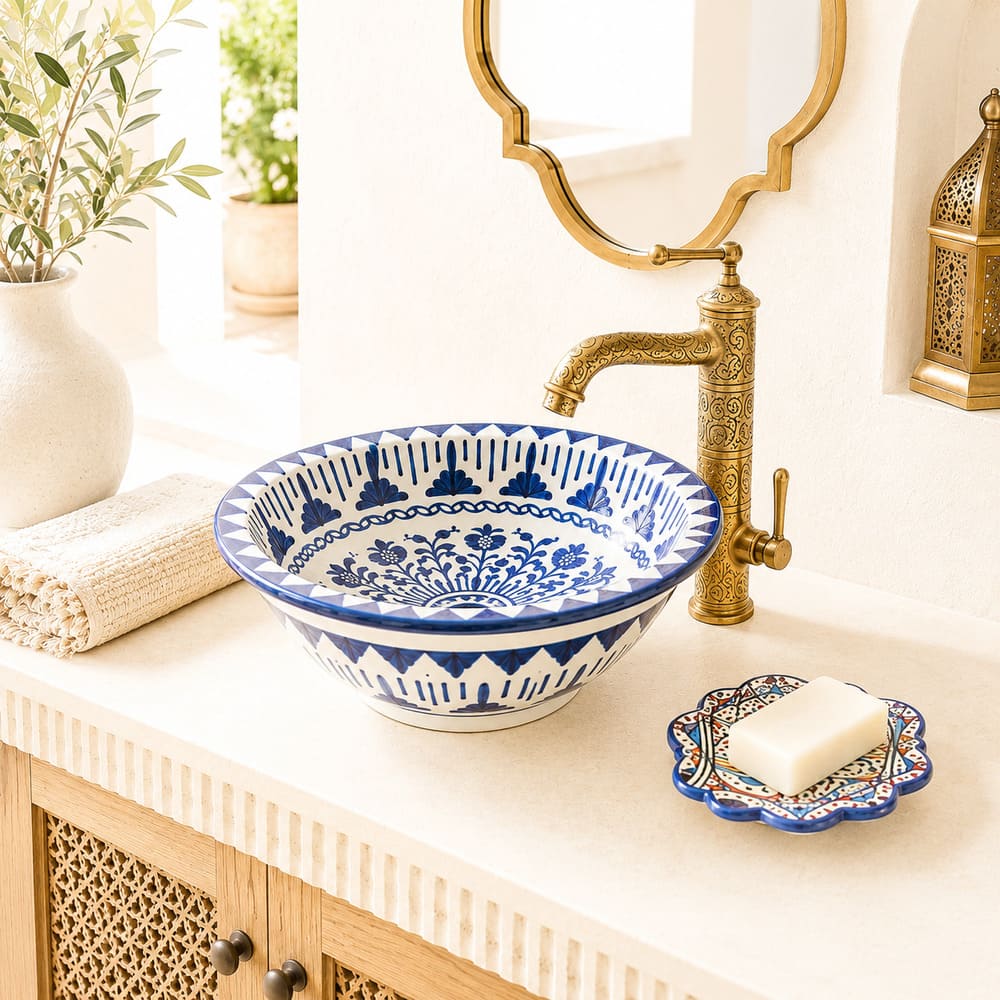
Ceramics is also one of the most deeply rooted crafts in Morocco. As with almost everything, each city or region has its own specific decorative styles, but in any case, we're talking about artisan products full of character and originality.
One of Morocco's most celebrated ceramic crafts is that of the potters of Fez. Fez pottery is distinguished by its rich and elaborate decoration, based on geometric figures.However, each area has its own peculiarities, so from Decoración Alcazaba we invite you to discover the beauty and richness of Moroccan ceramics.
Metalworking is another area where Moroccan artisans have achieved remarkable excellence. In any souk, and of course in our online store, you'll find pieces made of copper, tin, brass, alpaca, and more.
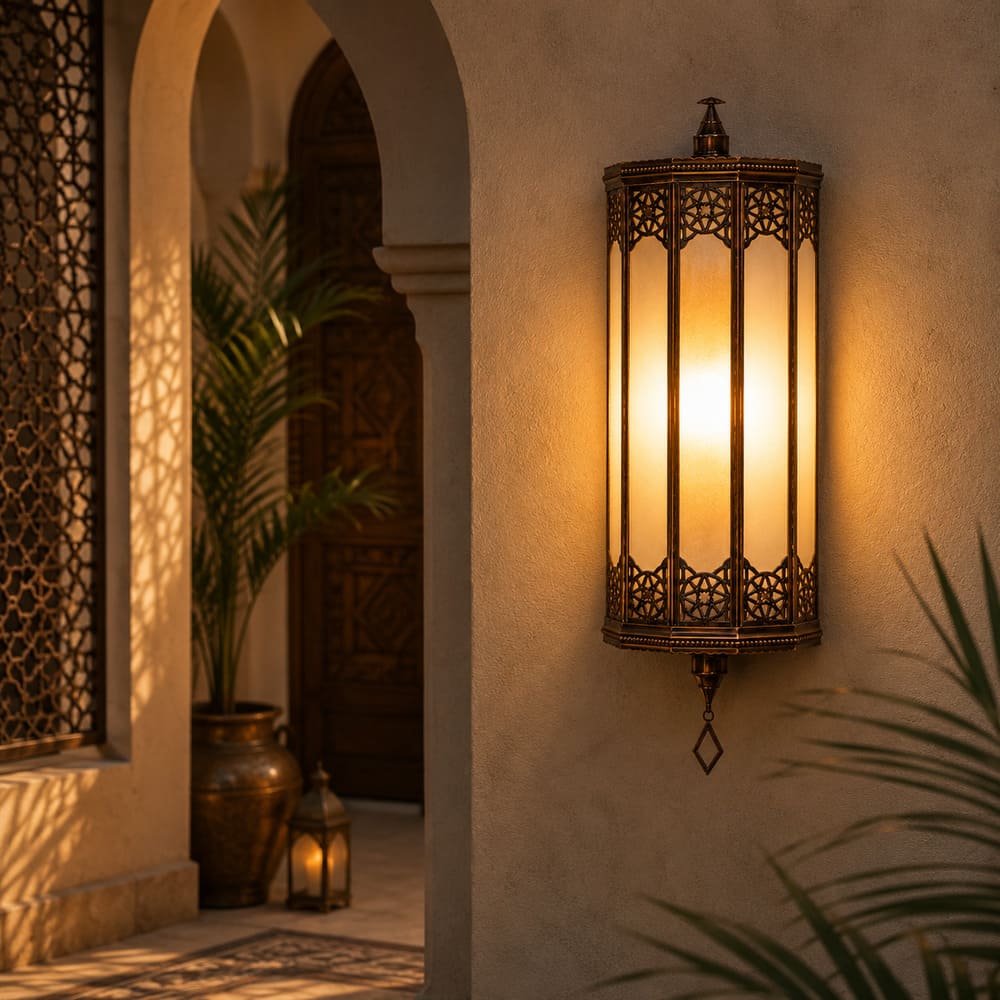
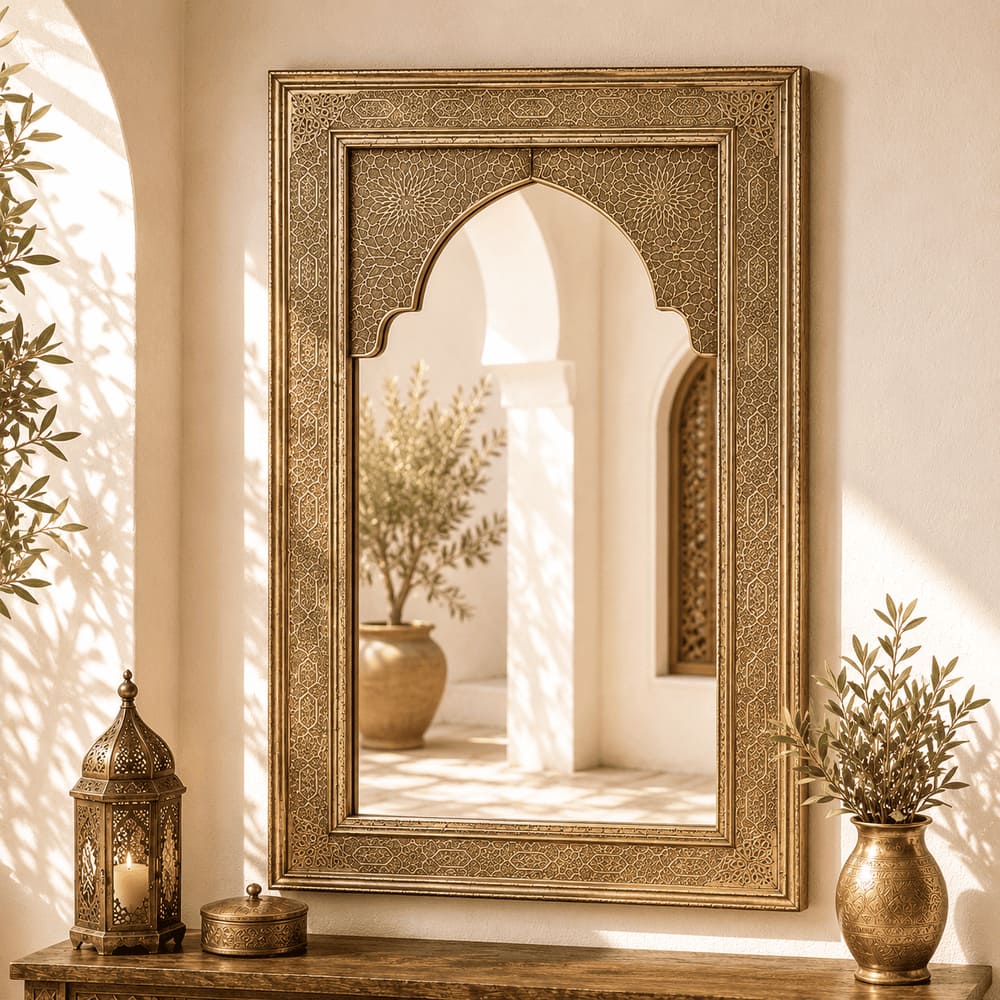
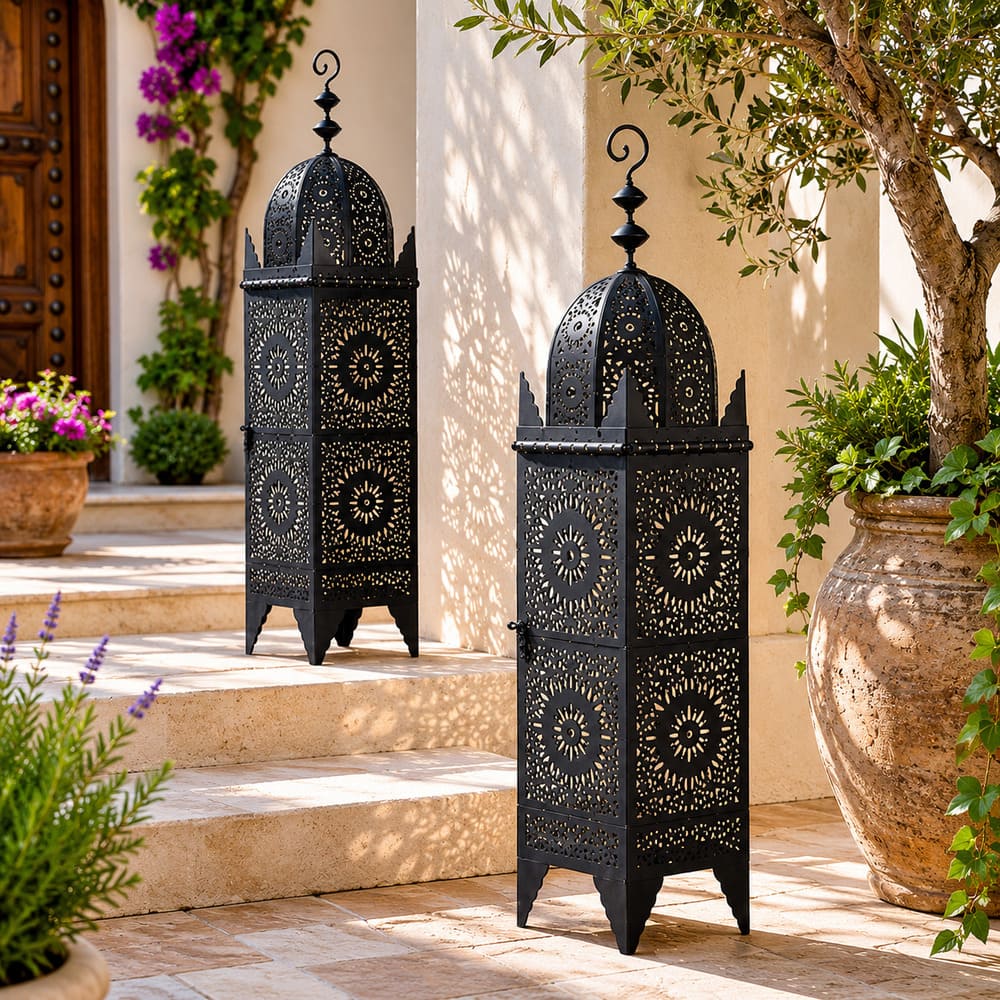
Among the most outstanding handcrafted pieces are, for example, hand-carved mirrors and frames, jewelry boxes, small boxes, and countless other items. And let's not forget two of the most prominent handcrafted items: Moroccan teapots and wrought iron lanterns in all their variations.
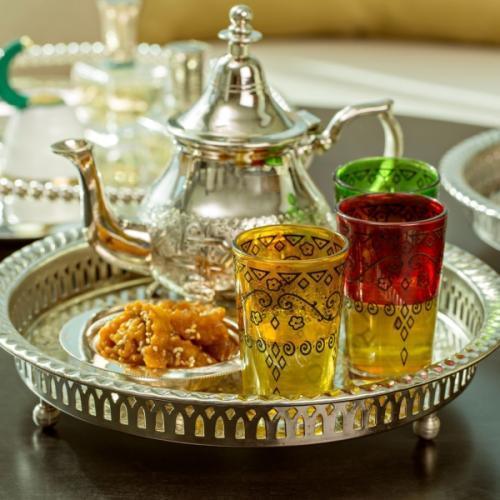
The metalwork, both wrought and embossed, directly evokes one of the most celebrated crafts of Morocco and the Maghreb: tea sets. For lovers of Moroccan tea, a tea set is practically essential for preparing and serving this quintessential Moroccan beverage. Depending on your budget, you can find handcrafted pieces of varying quality, from teapots and trays made of precious metals to more modest items like those found in any Moroccan home. Alongside these handcrafted pieces, the traditional tea glasses are indispensable. These are typically made of very fine crystal and are richly decorated. The decoration, as with the tea set, depends on your budget and can include techniques such as hand-carving and painting, and even metalwork.
One of the finest examples of Moroccan craftsmanship is its carpets. Each region has its own weaving style and distinctive patterns that convey centuries-old stories and traditions. Berber carpets, kilims, and tapestries in vibrant colors fill the markets and specialty shops.
The quality of the materials and the meticulous craftsmanship make each piece unique. Buying a rug in Morocco is like taking home a piece of handwoven history, where every knot tells a part of the soul of this country.
Zellige, or traditional mosaics, are one of the most refined forms of Moroccan art. These glazed ceramic mosaics are assembled piece by piece, forming intricate geometric patterns that decorate fountains, walls, and floors.
Zellige requires immense skill and patience, and is an art passed down through generations. The result is creations that not only beautify spaces but also represent the rich cultural heritage of Morocco.
Moroccan goldsmithing is another treasure offered by Moroccan craftsmanship. Jewelers in cities like Marrakech and Tiznit create necklaces, rings, bracelets, and earrings that combine silver, amber, coral, and turquoise.
These jewels not only beautify those who wear them, but also reflect specific cultural identities, such as Berber jewelry laden with symbolism and protection.
Woodworking is another manifestation of Moroccan craftsmanship excellence. Doors, ceilings, furniture, and small decorative objects are hand-carved with intricate patterns reminiscent of Andalusian architecture and Islamic art.
Visiting a carpentry workshop in Fez or Marrakech is to witness a patient art, where each chisel stroke reveals centuries of living tradition.
The color palette in Moroccan handicrafts is not accidental. Each color has its own meaning and evokes deep emotions. Earth tones, deep blues, and emerald greens are omnipresent and represent nature, the sea, and spiritual life.
These colors, applied to fabrics, ceramics, mosaics, and leather, create a unique visual identity that distinguishes Moroccan art in the world.
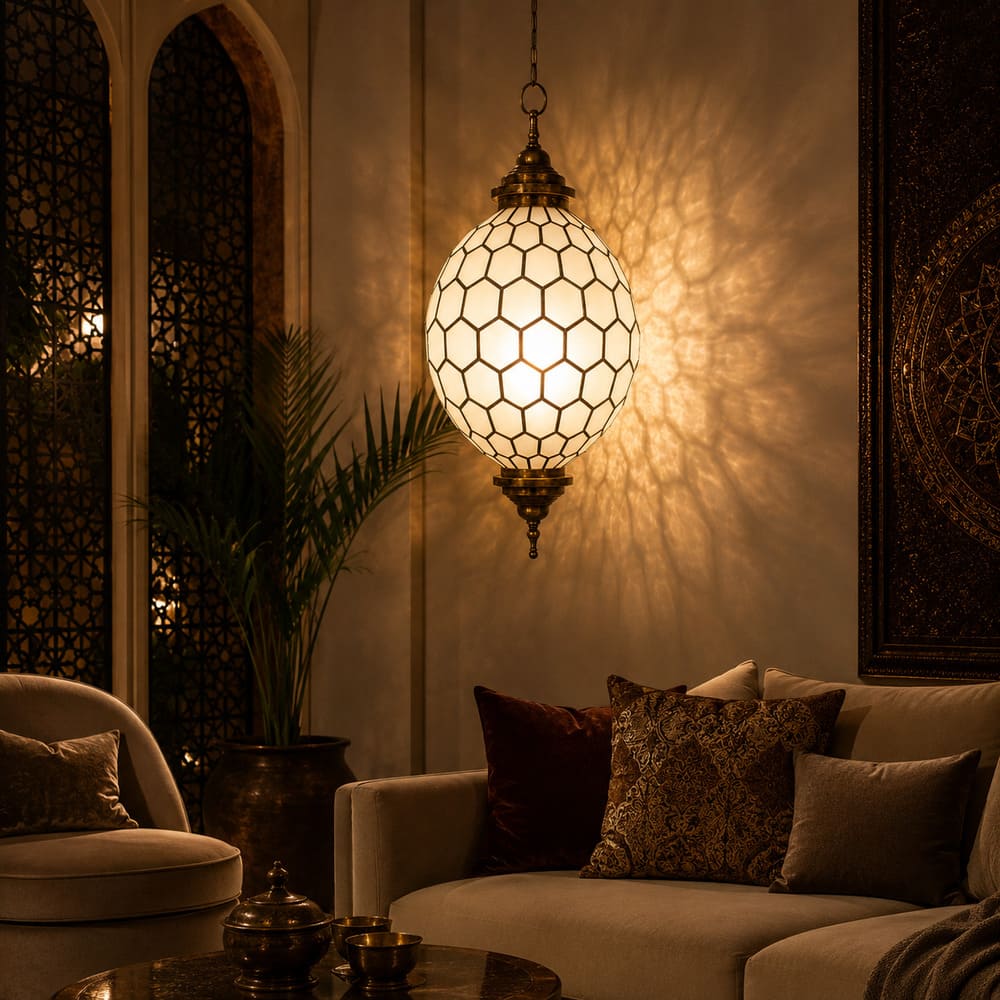
Today, Moroccan craftsmanship has conquered the world of interior design. Items such as wrought iron lamps, embroidered cushions, and Berber rugs have become essential in modern spaces seeking authenticity and warmth.
The fusion of the traditional with the contemporary has allowed Moroccan art to continue evolving without losing its ancestral essence.
A stroll through a souk is an unforgettable experience. These markets are true temples of folk art, where the finest examples of Moroccan craftsmanship come together: ceramics, jewelry, carpets, textiles, and metalwork.
Negotiating a price is not just an economic transaction, but a cultural tradition where the art of bargaining is part of Moroccan identity.
Fez is considered the spiritual and artisanal capital of Morocco. Its workshops of tanners, potters, and weavers are veritable laboratories of ancestral knowledge. Visiting the Fez medina is to immerse oneself in a universe where every object reflects centuries of artisanal perfection.
The pieces from Fez are particularly appreciated for their superior quality and their adherence to traditional production methods.
Moroccan crafts did not emerge from a vacuum, but are the result of the fusion of diverse civilizations: Berber, Arab, Andalusian and African.Each one contributed techniques, styles and materials that today make up this rich cultural mosaic.
This melting pot of cultures makes Morocco a place where art and history naturally intertwine in every handcrafted piece.
For Moroccans, crafts are not just an economic activity, but a living symbol of their identity. Each handmade object carries the collective memory of a people proud of their traditions.
This link between art and daily life makes Moroccan crafts an indispensable element of its intangible heritage.
Faced with the challenges of globalization, Moroccan artisans have adapted without abandoning their roots. The incorporation of new designs, online marketing techniques, and collaborations with international designers have revitalized the sector.
The future of Moroccan art lies in finding the perfect balance between innovation and tradition, thus ensuring its transmission to new generations.
Numerous contemporary artists, both Moroccan and international, find in Moroccan craftsmanship an inexhaustible source of inspiration. The geometric forms, vibrant colors, and rich symbolism of traditional objects constantly enrich modern art.
This influence has resulted in hybrid works that combine ancestral techniques with avant-garde expressions.
High fashion designers have incorporated elements of Moroccan craftsmanship into their collections: embroidery, fabrics, leathers and jewelry inspire highly sophisticated outfits and accessories.
This presence on international catwalks confirms the enduring relevance and universality of Moroccan art.
Buying a piece of Moroccan handicrafts is not just acquiring a decorative object: it is taking home a fragment of history, a testament to manual skill and a love of beauty.
Each handcrafted creation invites us to discover an authentic, vibrant, and deeply human Morocco.
Moroccan craftsmanship is much more than a cultural heritage: it's a way of life that continues to evolve, stirring emotions and connecting people through their senses. An authentic expression of Morocco's soul, ready to be discovered and admired by the world.
 Envios gratis
Disfruta de tu compra el