Your Cart is Empty



Whenever we talk about tea, We need to refer to the Arab culturesince both are completely related. For the cultureArab, he tea It forms an important part within it, being consumed in numerous countries, although mainly in Morocco and the Maghreb. Havingconverted MarrWetlands in one of the world's largest tea importers.
There's a well-known expression that says, "Bitter as life, strong as love, sweet as death," and that's exactly right; it perfectly captures the fascinating mix of flavors one experiences when tasting the famous Moroccan tea.
Tea and Arab cultureThey may seem to have been together for thousands of years, but that's not the case, even though it may not seem so. origin of tea in Moroccan culture it is more recent.
Hetea Tea arrived in Morocco in the 19th century, brought by the British, who were seeking new markets. This tea originated from plantations in their Indian colonies.
The surprise was that this British tea was very well received by theArab culture, which she quickly adapted to her traditions, including her typical mint infusions, thus giving them her own touch.
In Morocco,tea culture It stands out for its traditional form and serving style, usually alongside food. Tea is considered a hospitality and courtesy drink It is always served when a guest comes to the house; it is like a sign of friendship, of hospitality... and it is considered impolite for guests to refuse it.
This tradition has spread to parts of southern Spain, North Africa, and areas of the Sahel.
The custom is for tea to be prepared by men, usually the head of the family.
They tend to drink tea at all hours, no matter what time of day it is, although it is true that it is generally before and after meals.
Regarding thetea preparation, It depends a lot on the area, and even in Morocco, each Moroccan does it their own way. Therefore, there is no standard way to prepare it, although we do know the basics of how to do it and we will explain them to you.
In Morocco, they usually prepare tea in this way, using green tea of the following varietiesGunpowder and Chu mee, it They mix it with their usual infusions such as spearmint, mint, lemon verbena, or wormwood and add sugar. This is the base, but let's develop it a little more.
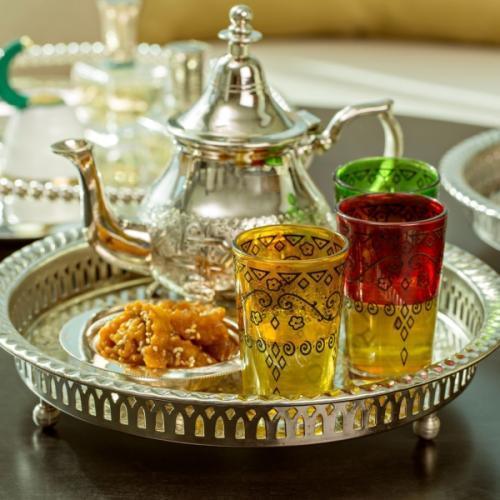
Bring water to a boil and add the tea (one tablespoon per person, plus one more directly into the teapot), the mint or spearmint, and the sugar. Meanwhile, pour a glass of boiling water into the teapot you'll be using and wait about thirty seconds to remove the cold and metallic taste. After this, put the tea in the teapot—but not just any teapot; it has to be a stainless steel teapot.The typical, charming Arabic teapots that we've all seen at some point, with their reliefs and carvings... which keep the heat in for a long time and can be found inAlcazaba Decoration.
Finally, it is tasted and checked to ensure it has a good flavor. It should have an intense sweetness accompanied by an aroma of spearmint or mint (peppers from the mint tree are also often added). orange tree, provided we are in the right season).
It's essential to have the famous Moroccan tea sets, which consist of small, charming, and colorful glass cups in which the tea is served once brewed. If you'd like to take a look at Moroccan tea sets, simply visit our section ontea glasses and accessories.
But…How do they serve tea? When serving it, it must be very hot and poured from a certain distance from the glass so that the tea oxygenates and enhances its flavor, thus generating a certain foam.
According to thetraditionArab, Both the appearance and flavor of the tea change as it's served, and it's typical to have rounds. The first round is made only with the tea leaves, so it's very bitter; the second round has a little sugar added, improving the flavor somewhat, while the last round has more sugar and also mint or spearmint, resulting in the true flavor of Moroccan tea.
With the previous explanation, we can now understand the tradition of serving tea three times; according to them, the first glass is"Bitter as life"; the second,"strong as love" and the last"sweet as death".
With these tips and tricks you can serve authentic Moroccan tea at home.
Whenever we talk abouttea, We need to refer to the Arab culture since both are completely related. For the cultureArab, he tea It forms an important part of the tea industry, being consumed in numerous countries, although primarily in Morocco and the Maghreb. Morocco has become one of the world's largest importers of tea.
There's a well-known expression that says, "Bitter as life, strong as love, sweet as death," and that's exactly right; it perfectly captures the fascinating mix of flavors one experiences when tasting the famous Moroccan tea.
Tea and Arab culture They may seem to have been together for thousands of years, but that's not the case, even though it may not seem so. origin of tea in Moroccan culture it is more recent.
Hetea Tea arrived in Morocco in the 19th century, brought by the British, who were seeking new markets. This tea originated from plantations in their Indian colonies.
The surprise was that this British tea was very well received by theArab culture, which she quickly adapted to her traditions, including her typical mint infusions, thus giving them her own touch.
In Morocco,tea culture It stands out for its traditional form and serving style, usually alongside food. Tea is considered a hospitality and courtesy drink It is always served when a guest comes to the house; it is like a sign of friendship, of hospitality... and it is considered impolite for guests to refuse it.
This tradition has spread to parts of southern Spain, North Africa, and areas of the Sahel.
The custom is for tea to be prepared by men, usually the head of the family.
They usually drink tea at all hours, no matter what time of day it is, although it is true that it is generally before and after meals.
Regarding thetea preparation, It depends a lot on the area and even in Morocco, each Moroccan does it their own way, so there is no standard way to prepare it, although we do know the basics and we are going to explain them to you.
In Morocco, they usually prepare tea in this way, using green tea of the following varietiesGunpowder and Chu mee, They mix it with their usual herbal infusions such as spearmint, mint, lemon verbena, or wormwood, and add sugar. This is the base, but let's develop it a little further.
We bring water to a boil and add the tea (one tablespoon per person, plus one more directly into the teapot), the mint or spearmint, and the sugar. Meanwhile, we pour a glass of boiling water into the teapot we're going to use and wait about thirty seconds to take away the cold and metallic taste. After this, we put the tea in the teapot, but not just any teapot; it has to be a steel or metal teapot. The typical, charming Arabic teapots that we've all seen at some point, with reliefs and carvings, retain heat for a good while and can be found in...Alcazaba Decoration.
Finally, it is tasted and checked to ensure it has a good flavor. It should have an intense sweetness accompanied by an aroma of spearmint or mint (orange blossoms are also often added, provided it is the right season).
It's essential to have the famous Moroccan tea sets, which consist of small, charming, and colorful glass cups in which the tea is served once brewed. If you'd like to take a look at Moroccan tea sets, simply visit our section ontea glasses and accessories.
But…How do they serve tea? When serving it, it must be very hot and poured from a certain distance from the glass so that the tea oxygenates and enhances its flavor, thus generating a certain foam.
According to thetraditionArab, Both the appearance and flavor of the tea change as it's served, and it's typical to have rounds. The first round is made only with the tea leaves, so it's very bitter; the second round has a little sugar added, improving the flavor somewhat, while the last round has more sugar and also mint or spearmint, resulting in the true flavor of Moroccan tea.
With the explanation above, we can now understand the tradition of serving tea three times; according to them, the first glass is"Bitter as life"; the second,"strong as love" and the last"sweet as death".
With these tips and tricks you can serve authentic Moroccan tea at home.
 Envios gratis
Disfruta de tu compra el