Your Cart is Empty



The Moroccan tiles They are a fascinating option for those who wish to add color, texture, and an artistic touch to their spaces. Known for their geometric patterns and vibrant colors, these traditional tiles transform any room into a space full of personality and elegance. Moroccan tiles are perfect for creating unique atmospheres, whether in kitchens, bathrooms, or patios.
Moroccan tiles, also known as zellige, These are handcrafted ceramic pieces made in Morocco. Their traditional production uses clay and natural glazes, resulting in vibrant colors and unique textures. The patterns on these tiles are often geometric and intricate, inspired by Islamic architecture and Moroccan culture, and they are used to decorate walls, floors, and other surfaces.
Moroccan tiles are distinguished by their glossy finish and irregular shapes, which lend them authenticity and a handcrafted style. The predominant colors are typically blue, green, white, and earth tones, reflecting the palette of Moroccan nature and architecture.
To incorporate Moroccan tiles into your home, choose a key area you'd like to highlight. You can apply them to an accent wall in the kitchen, create a decorative detail in the bathroom, or use them as cladding on the patio. These tiles pair especially well with furniture and accessories in neutral tones, allowing their colors and patterns to stand out.
Moroccan tiles are available in stores specializing in ceramics and home decor. You can also find them online at home decor websites that offer a variety of sizes, colors, and designs. When choosing Moroccan tiles, make sure they are authentic to ensure their quality and durability.
The Moroccan tiles They are characterized by their intricate geometric patterns and their artisanal manufacturing process, known as zellige. On the other hand, the Arabic tiles They encompass a wider range of styles, including arabesques, calligraphy, and floral motifs, typical of the entire Islamic tradition.
While Moroccan tiles typically feature stricter geometric compositions, the Arabic tiles They tend to be more fluid and ornamental. Both styles, however, share the use of vibrant colors and traditional glazing techniques that bring to life elegant spaces steeped in history.
The arabesque tiles They draw inspiration from stylized plant forms and repetitive patterns, creating surfaces full of movement and delicacy. These designs bring sophistication and an exotic touch to walls, floors, or ornamental fountains.
When integrated into interiors, arabesque tiles offer a decorative alternative that merges Islamic tradition with modernity, making them perfect for living rooms, kitchens, and patios full of light and life.
The Moroccan mosaics They are an artistic expression that goes beyond mere decoration. Each ceramic fragment is carefully hand-cut and assembled to form stunning geometric compositions that transform any space into a true work of art.
From traditional fountains to elaborate palace walls, Moroccan mosaics have been a constant in Islamic architecture, serving as symbols of perfection, beauty, and spirituality.
Incorporate Arabic-style tiles In modern decor, it allows for the fusion of tradition and contemporary style in a single space. Its geometric patterns and elegant curves can be perfectly integrated into minimalist bathrooms, open kitchens, or modern patios.
Arabic-style tiles not only add a striking aesthetic touch, but also create environments steeped in history, evoking the splendor of Andalusian and Maghrebi architecture.
The "Moroccan box" in architecture refers to the design of interior spaces based on structures that are closed to the outside but richly decorated on the inside. It is a typology where elements such as... Moroccan tiles and the mosaics take center stage.
This architectural concept seeks to protect from the outside heat and create oases of coolness and internal beauty, using fountains, interior courtyards, and ceramic coverings that provide color, freshness, and visual richness.
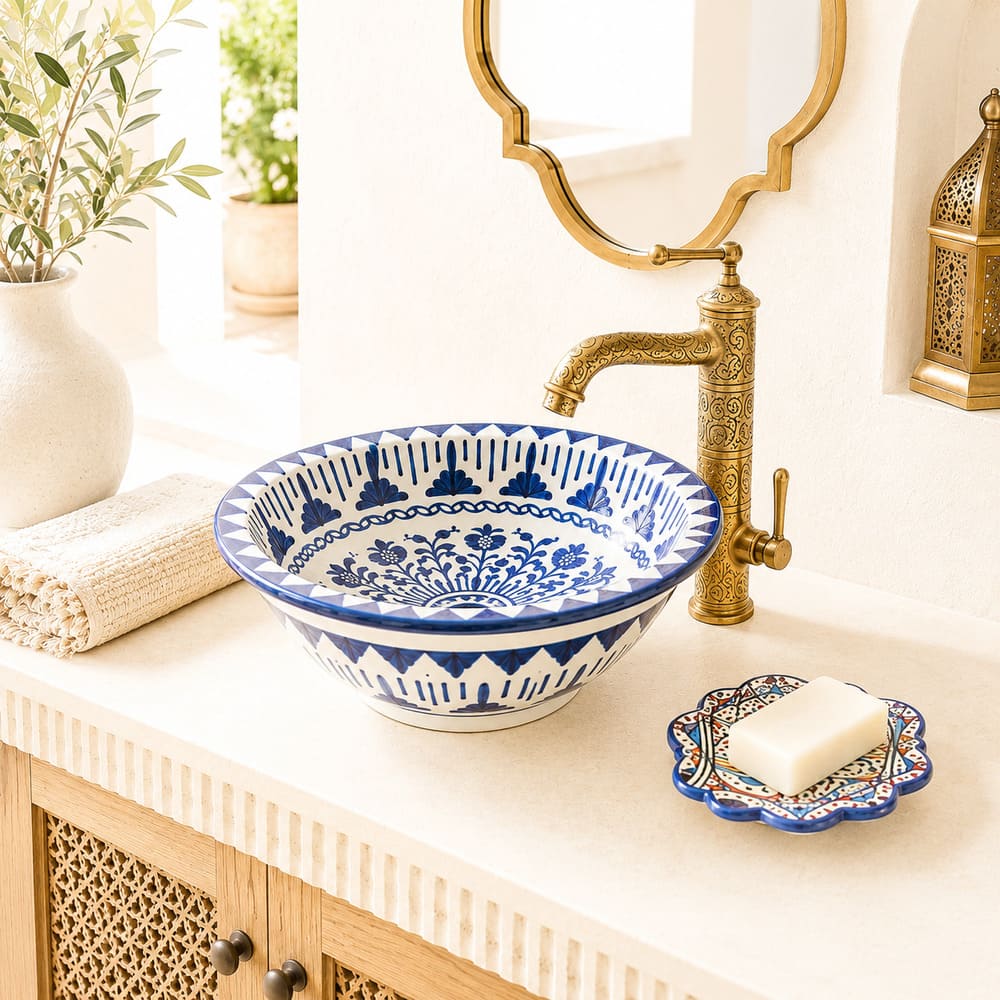
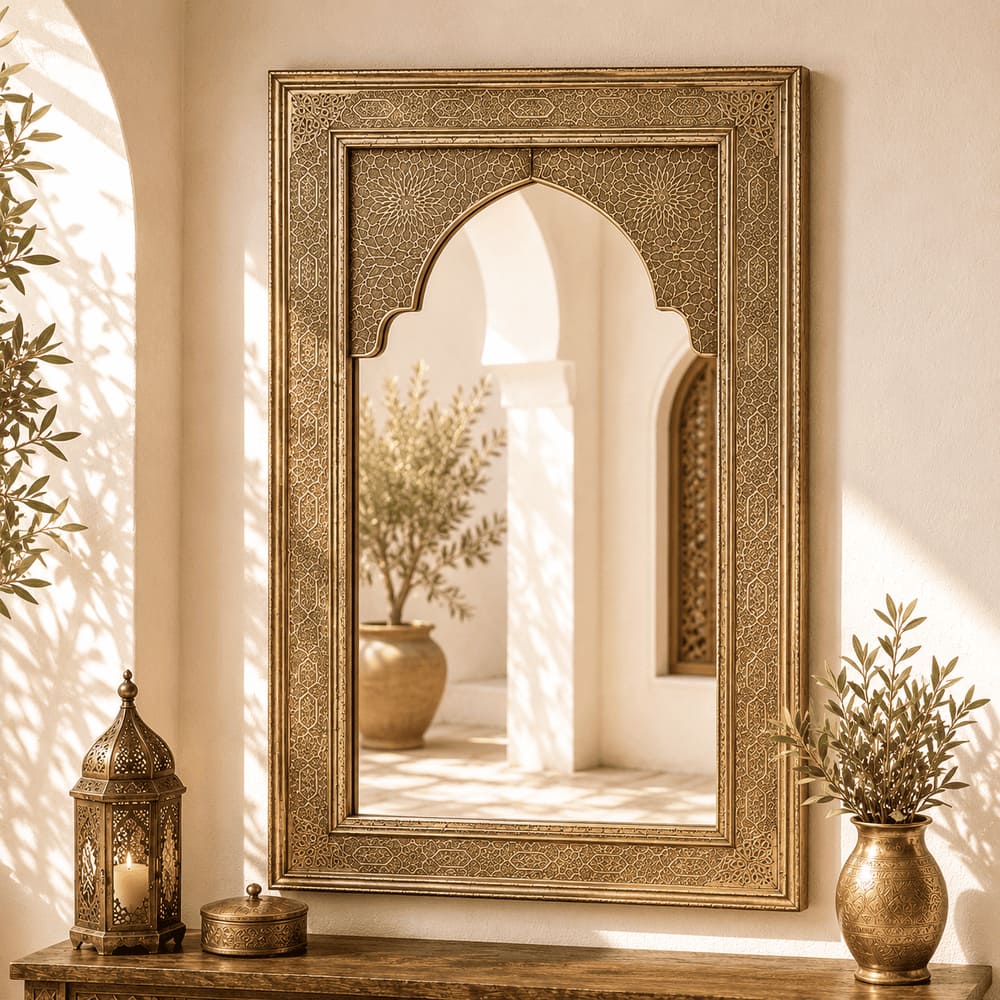
Today, the decorative tiles Inspired by Moroccan art, they are used far beyond kitchens and bathrooms. They are integrated into headboards, artistic murals, mirror frames, or even as decorative details on tables and bar counters.
This versatility demonstrates how tiles, especially those of Moroccan and Arabic inspiration, remain a timeless resource for those seeking to personalize and beautify their spaces in a unique way.
He Arabic tile It stands out for its elegance and symbolic depth. Used for centuries in palaces, mosques, and courtyards, its designs reflect concepts such as unity, eternity, and the complexity of creation.
Today, these tiles allow us to revive that ancient heritage in contemporary interior design projects, offering a direct connection with the art and culture of Arab and Islamic civilizations.
A current trend in interior design is to combine Moroccan tiles and Arabic tiles in the same environment. Thanks to their similarities in vibrant colors and artistic ornaments, it is possible to create harmonious compositions full of character.
To achieve visual balance, it is recommended to maintain a consistent color palette and use more complex patterns in key areas, leaving the rest of the space in neutral tones or natural textures.
Decorating with Moroccan tiles is a way to bring the art and culture of Morocco into your home. These tiles offer a unique aesthetic and are an excellent choice for those seeking a colorful, sophisticated, and historically rich atmosphere. Moroccan tiles are a functional work of art that adds personality and beauty to any space.
 Envios gratis
Disfruta de tu compra el