Your Cart is Empty



Sometimes we buy handcrafted items as mere decorative objects, pieces whose beauty elevates them to works of art whose sole purpose is contemplation. However, there is a craft that, in many cases, forms part of our daily lives and often goes unnoticed: leather goods.
Moroccan artisans have elevated the art of embossed leatherwork to unparalleled levels of excellence. This is evidenced by the fact that leatherwork is known as marroquinería, a term whose etymological root leads directly to Morocco.
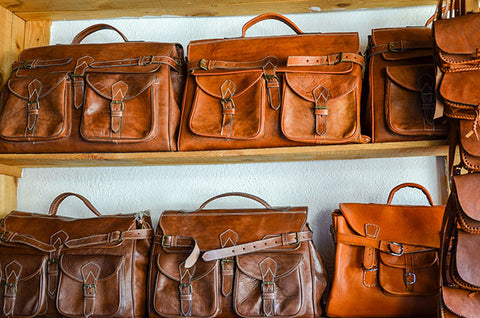
If we delve deeper into the matter, we find that leather craftsmanship dates back to prehistoric times when early humans discovered that animal hides provided the raw material for making rudimentary clothing to protect themselves from the cold. Evidence of leather garments, bags, and sandals, some over 8,000 years old, has been found.
Initially, hides with hair were used, but later, early artisans discovered that removing the hair resulted in a more versatile product. Between the years 3000 and 5000 a.C. The tanning and making of leather goods took place. By the year 1000 AD, the fashion for furs had become established throughout the Christian West, including the Iberian Peninsula, as well as in the Arab world of the Near East, North Africa, and Muslim Spain.
The city of Fez offers a wide range of experiences, but undoubtedly one of the most important and impactful is a visit to its Medina, and more specifically, the tanners' souk. Heirs to a rich and extensive tradition, the artisan tanners of Fez continue to craft leather goods just as their ancestors did. Through a combination of artisanal techniques, they transform animal hides into soft leather, which they then use to make items such as belts, wallets, and bags.
Raw hides arrive in the medina of Fez. Depending on its intended use, different animal hides are chosen, although the most common are those of lambs, goats, cows, and camels. The hides are then treated with quicklime and pigeon droppings to remove any residue. Yes, you read that right, pigeon droppings, which are partly responsible for the leather's softness. Afterward, it is air-dried while continuing to be worked by the expert hands of Moroccan artisans. In fact, if you are fortunate enough to visit the medina of Fez, you will see sheets of leather fluttering from the rooftops of all the houses, allowing the wind to do its work.
But without a doubt, what makes Moroccan leather craftsmanship unique is the use of natural dyes. Despite continuous advancements and the growing availability of artificial products, Moroccan artisans continue to use natural dyes to color their pieces. This process takes place in stone vats that have become a major tourist attraction. Natural dyes are used in these vats to obtain a wide range of colors: mint for green, poppy for red, and saffron for yellow.
The leather is immersed in these vats for several days, depending on the intensity of the dye and other parameters that the master tanners know perfectly. Meanwhile, the artisans work diligently inside these large stone vats, checking the process, tamping, and rubbing—an arduous task carried out in the blazing sun amidst a mixture of aromas that defies description.
Once this process is complete, we obtain sheets of excellent Moroccan leather ready to be used in the creation of a wide variety of handicrafts. These pieces can, of course, be found on our website, guaranteeing you a truly unique item.
Information and wholesale orders:
Mail: info@decoracionalcazaba.com
Telephone numbers: 697431100/958468377
Web: www.decoracionalcazaba.com
Follow us on social media
Sometimes we buy handcrafted items as mere decorative objects, pieces whose beauty elevates them to works of art whose sole purpose is contemplation. However, there is a craft that, in many cases, forms part of our daily lives and often goes unnoticed: leather goods.
Moroccan artisans have elevated the art of embossed leatherwork to unparalleled levels of excellence. This is evidenced by the fact that leatherwork is known as **marroquinería** (leather goods), whose etymological root leads directly to Morocco.
If we delve deeper into the matter, **leathercraft** dates back to prehistory when early humans discovered that animal hides provided the raw material for making rudimentary clothing to protect them from the cold. Evidence of leather garments, bags, and sandals has been found, some dating back more than 8,000 years.
Initially, hides with hair were used, but later, early artisans discovered that removing the hair resulted in a more versatile product. Between the years 3000 and 5000 a.C. The tanning and manufacture of leather goods took place. By the year 1000 AD, the fashion for furs had become widespread throughout the Christian West, including the Iberian Peninsula, as well as in the Arab world of the Near East, North Africa, and Muslim Spain.
The city of Fez offers a wide range of experiences, but without a doubt, one of the most striking is a visit to its Medina and, more specifically, to the tanners' souk. Heirs to a rich and vast tradition, the artisan tanners of Fez continue to craft leather goods just as their ancestors did. Through a combination of artisanal techniques, they transform animal hides into soft leather, which they then use to make items such as belts, wallets, and bags.
Raw hides arrive in the medina of Fez. Depending on its intended use, different animal hides are used; although the most common are those of lambs, goats, cows, and camels. The hides are then treated with quicklime and pigeon droppings to remove any residue. Yes, you read that right, pigeon droppings, which are partly responsible for the leather's softness. Afterward, it is air-dried while continuing to be worked by the expert hands of Moroccan artisans. In fact, if you are fortunate enough to visit the medina of Fez, you will see sheets of leather fluttering from the rooftops of all the houses, allowing the wind to do its work.
But without a doubt, what makes Moroccan leather craftsmanship unique is the use of natural dyes. Despite continuous advancements and the growing availability of synthetic products, Moroccan artisans continue to use natural dyes to color their pieces.This process takes place in stone vats that have become a top tourist attraction. In them, natural dyes create a wide range of colors: mint for green, poppy for red, and saffron for yellow.
The leather is immersed in these vats for several days, depending on the intensity of the dye and other parameters that the master tanners know perfectly. Meanwhile, the artisans toil inside these large stone vats, checking the process, tamping, rubbing—an arduous task carried out in the blazing sun and amidst a mixture of aromas that defies description.
Once this process is complete, we obtain sheets of excellent Moroccan leather ready to be used in the creation of a wide variety of leather crafts. These pieces, of course, can be found on our website, guaranteeing you a truly unique item.
Leather goods refer to the artisanal and specialized work involved in crafting leather objects and accessories. Traditionally, these products include items such as handbags, wallets, belts, briefcases, and other high-quality accessories that combine functionality and aesthetics. This art is not only a leatherworking technique but also a cultural tradition that has endured through generations, especially in countries like Morocco, Italy, and Spain.
Leatherworking is one of the oldest forms of craftsmanship, perfected over time by master artisans who know every detail about handling the material. From tanning the hides to stitching and dyeing, each step is essential to creating high-quality, durable pieces.
Leatherworking is not simply a process of transforming materials; it is an art that requires patience, skill, and a deep understanding of the material. From tanning the hide to transforming it into a finished product, artisans perform each step with care and precision. First, the appropriate hide is selected, usually from animals such as cows, goats, or sheep. This hide is then subjected to a tanning process that makes it more supple and durable.
Once tanned, the leather is cleaned, dyed, and conditioned using natural dyes that give handcrafted leather goods their characteristic color. Artisans employ a variety of techniques, from embossing and engraving to hand-stitching, to ensure that each piece is unique. This manual approach is what distinguishes leather goods from industrial production, guaranteeing that each item is a work of art in itself.
Leather goods are not limited to personal accessories; they also play an important role in home decor. Handcrafted leather pieces such as pillows, tapestries, and curtains can add a touch of sophistication and warmth to any room. The rich texture of the leather, along with the vibrant colors obtained through natural dyes, makes these products decorative elements of great aesthetic value.
By incorporating leather goods into your decor, you can transform an ordinary space into a welcoming and stylish environment. The versatility of leather allows it to be used in a wide range of decorative applications, from furniture upholstery to small decorative details such as picture frames or leather-finished side tables.
In a world increasingly aware of environmental issues, **handcrafted leather goods** stand out for their sustainable approach. Unlike mass-produced goods, **leather goods** are created responsibly, using natural materials and manual processes that not only preserve cultural heritage but also minimize environmental impact. The use of natural dyes and tanning hides without harsh chemicals are examples of how artisans are committed to sustainability.
Furthermore, being handmade, leather goods tend to be more durable, meaning they are not only high-quality but also help reduce excessive resource consumption. By choosing handcrafted leather goods, you are not only acquiring a unique piece but also contributing to a more sustainable future.
The concept of **luxury leather goods** refers to leather items that stand out not only for their exceptional quality but also for their exclusivity. Luxury brands specializing in **leather goods** employ highly precise manufacturing techniques, using only the finest materials available. The leather used in these products is carefully selected, and each piece is crafted with a level of detail that guarantees an impeccable final product.
Luxury in leather goods refers not only to appearance but also to functionality. Handbags, wallets, and other luxury leather accessories are not only visually stunning but also designed to last a lifetime, with a quality that only expert artisans can provide.
Throughout the centuries, leatherwork has been a fundamental part of many cultures, especially in the Mediterranean, North African, and Middle Eastern regions. In countries like Morocco, Italy, and Spain, the tradition of leatherworking has been passed down from generation to generation, and each region has developed its own styles and techniques that make its products unique.
The influence of handcrafted leather goods extends far beyond its origins, as it is now appreciated and valued worldwide. The quality of the pieces and the skill of the artisans continue to be admired for their ability to transform leather into more than just a material: they turn it into an expression of art and culture.
Today, leather goods play a crucial role in contemporary fashion, as designers worldwide incorporate leather items into their collections. Leather goods such as handbags, backpacks, and belts have become symbols of status and style. Leather goods are not only functional but also a medium for designers to express their creativity.
Furthermore, the focus on sustainability and quality has led many brands to opt for handcrafted leather goods, which represent not only an ethical choice but also an investment in timeless luxury pieces. Luxury leather goods and leather crafts are setting trends, and more and more consumers value well-made products with a rich cultural and artisanal history behind them.
Wholesale information and orders:
Mail: info@decoracionalcazaba.com
Telephone numbers: 697431100/958468377
Web: www.decoracionalcazaba.com
Follow us on social media
 Envios gratis
Disfruta de tu compra el